


 96 / 100

96
February 2016
The Last Word - Letters
radcom@rsgb.org.ukCHANGING DETAILS
Roy, M0RRV, Sub Manager for M3, M6, M1
If you use the RSGB QSL Bureau, please can
you inform your Sub Managers when you
change your address and e-mail? I have just
had some envelopes returned as ‘not known
at this address’. I know most of you tell the
RSGB when you change address, but it is
important you tell your Sub Manager as well,
otherwise it’s a waste of envelopes –
your
envelopes.
Also tell your Sub Manager when you
change your e-mail as well. I have recently
sent 30 e-mails and all but 5 came back as
unknown e-mail addresses. Check places
like QRZ.com too and make sure everything
is up to date.
APRS 144.800MHz
Steve, G8SFR
Can all APRS users on 144.800MHz please
ensure that their transmitters are set to narrow
deviation, 2.5kHz peak deviation? The 2m
band plan as a whole is now a 12.5kHz
channel spacing band and 144.8125MHz is
assigned to DV Gateways. Using excessive
deviation increases the potential of adjacent
channel interference to these gateways and
their users.
EMC - CE or E mark, do
manufacturers comply?
Carl Morris, MW0TBB
Most of us will have come across the familiar
CE mark on a wide range of products but
how many of our fraternity will have come
across the ‘e’ approval mark. If we are
mobile users of radio communication devices
installed in our vehicles we should have,
as since October 2002 it has been a legal
requirement for radio equipment fitted in our
cars or commercial vehicles.
I have yet to come across the ‘e’ mark on
any of the radios I have purchased since I
started in the hobby in 2010. Directive-95-
54-EC version 4 issued 09 October 2002
in section 4.7 “one-off” equipment makes
interesting reading, stating that
“equipment
designed by a commercial producer for use
by radio amateurs is not exempt”.
In this era of hybrid and fully electric
vehicles I can see it becoming more of a
concern. Most amateurs will not have come
across these requirements and perhaps an
article in
RadCom
to enlighten the Members
of such requirements would help to make
sure we comply.
In June this year the directives will change
to Radio Equipment Directive (RED) and we
plan to publish something on this clarifying
impacts on the hobby. We are still active
in the standards groups and have become
aware of new requirements expected in
the 5 year timeframe. These may require
all equipment containing transmitters to
be type approved before fitting to vehicles.
We need to clarify how this is interpreted for
amateur radio transmitters.
John Rogers, M0JAV, RSGB EMC Committee
Check out the details
Bill Hamilton, G0CXF
Recently on a Facebook amateur radio
group I was horrified to see advertising
from so-called repair engineers, none of
whom as far as I could ascertain have any
formal qualifications at all. I would like
point out to the unwary that these traders
are usually not covered by insurance should
they damage your equipment. So who will
pay for rectification? It could also result in
your warranty being voided. Make sure that
anyone who works on your radio is both
qualified and capable of working on high
specification communications equipment.
Standing up for engineering
David Sumner, G3PVH
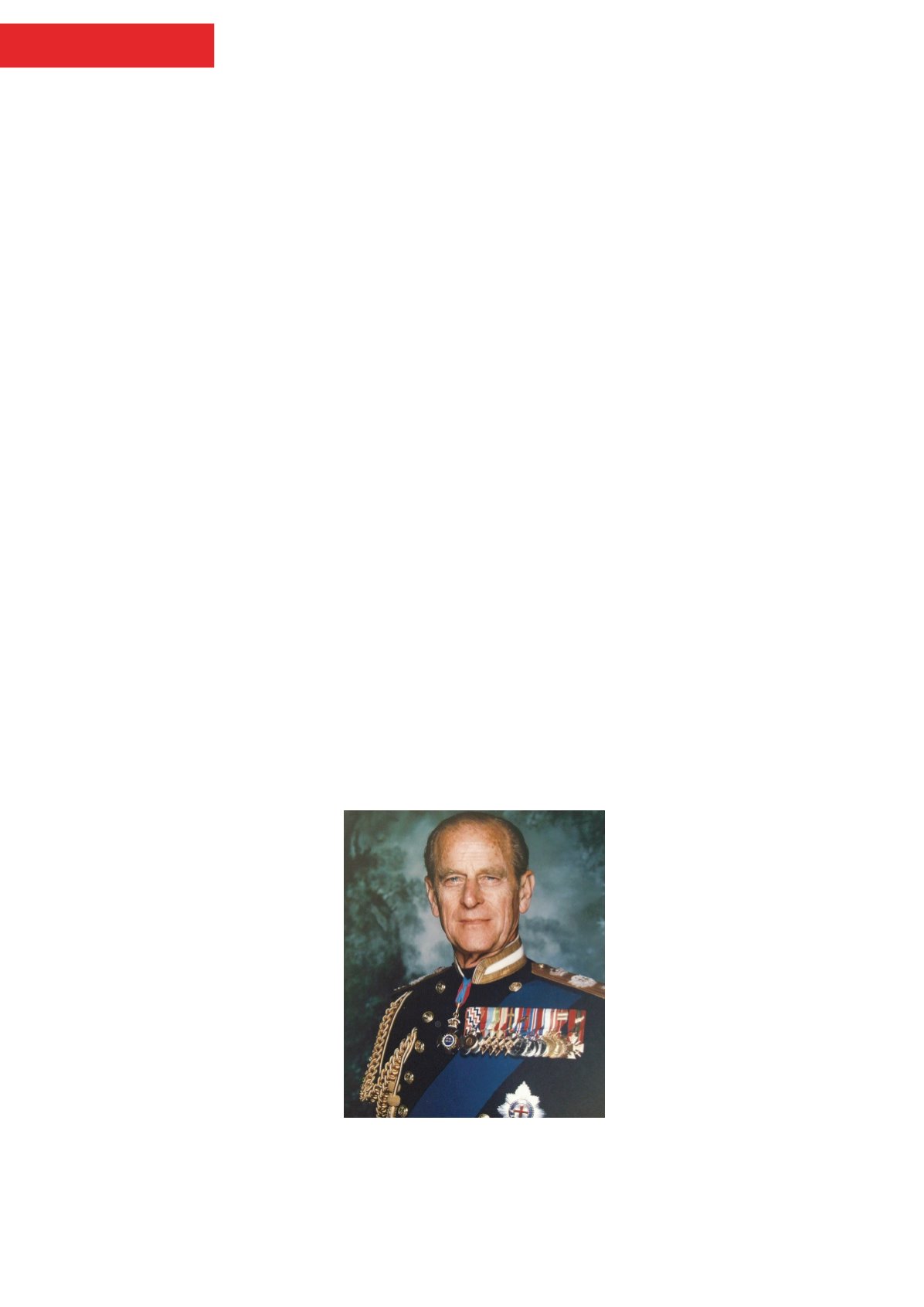
Congratulations to our long serving patron,
HRH The Duke of Edinburgh, for standing up
for engineering on Radio 4
(www.bbc.co.uk/news/uk-35211130)
What a shame that the pure science
community in schools and academia so often
ignore and fail to understand engineering.
Radio amateurs will know that the Duke
is correct when he says, “everything that
wasn’t invented by God was invented by an
engineer”.
Let’s try to explain to those around us
that in addition to building tunnels and
cars, engineers design mobile networks and
computers.
The Remote Revolution
Paul O’Kane, EI5DI
Radio amateurs do it with amateur band RF,
everyone else uses the internet. When we
use the internet, we’re the same as everyone
else. If we want to be different from everyone
else, we should use amateur band RF and
nothing else. If you’re on the internet and you
think you’re different from everyone else, you
should think again.
How things are done matters, and how
we communicate with one another gives us
our name. I’m a radio amateur, not a hybrid-
communications amateur.
Your history in amateur radio
Steve Sawyer, 2E0NHR
Something I would like to see more of in
RadCom
is readers’ history in the hobby.
I love modern history and I love amateur
radio, so I think it would be great to read
how people first became interested in radio.
Things like your local Elmer – did everyone
have one? I know I did. The Last Word is
a great place for short accounts of how you
started in the hobby. What do you think?
ANGLE GRINDING
Derek Smith, G1ZJQ
In reply to Bob, G4PVB (The Last Word,
November 2015)
The recommended eyewear for angle grinding
is a pair of safety goggles because safety
glasses do not fit closely enough to guarantee
exclusion of particles. Going further, if the
workpiece is near or above head height then
safety glasses and a full face shield are more
appropriate. Hearing protection is essential too;
not much point in having that metalwork in
the sky if the radio sounds muffled! Misting up
can be inconvenient and, decked in the correct
safetywear, we can look rather comical… but
I’d rather look silly for a few minutes than wear
an eye-patch or scar. (I’m currently offshore,
where angle grinding is commonplace!)
THANKS TO ICOM UK
Russell Tribe, G4SAQ
I must congratulate ICOMUK and specifically,
their engineer Bob, for the excellent service
I recently received. My transceiver was
damaged following a nearby lightning strike
so I delivered it to ICOM UK for repair. The
very next day I received a phone call from
their engineer, Bob, who explained the extent
of the damage and then kindly emailed
photos to assist with my insurance claim.
Bob kept me in touch throughout the repair
process and clearly cared a lot about getting
it right for me. Very many thanks!
HIGH EFFICIENCY MAGNETIC LOOP
ANTENNAS
Ken Hough, M0KOH
In reply to Norman, G0GBZ (The Last Word,
January)
In my article I did not state that “commercially
built mag loops are only of medium efficiency
and not suited for 40m”. I actually stated
that “I would rate most of these [commercial
products] as being of medium efficiency and
not all are suited for use at less than 10MHz.”