


 61 / 100

February 2016
61
Book Review
Review
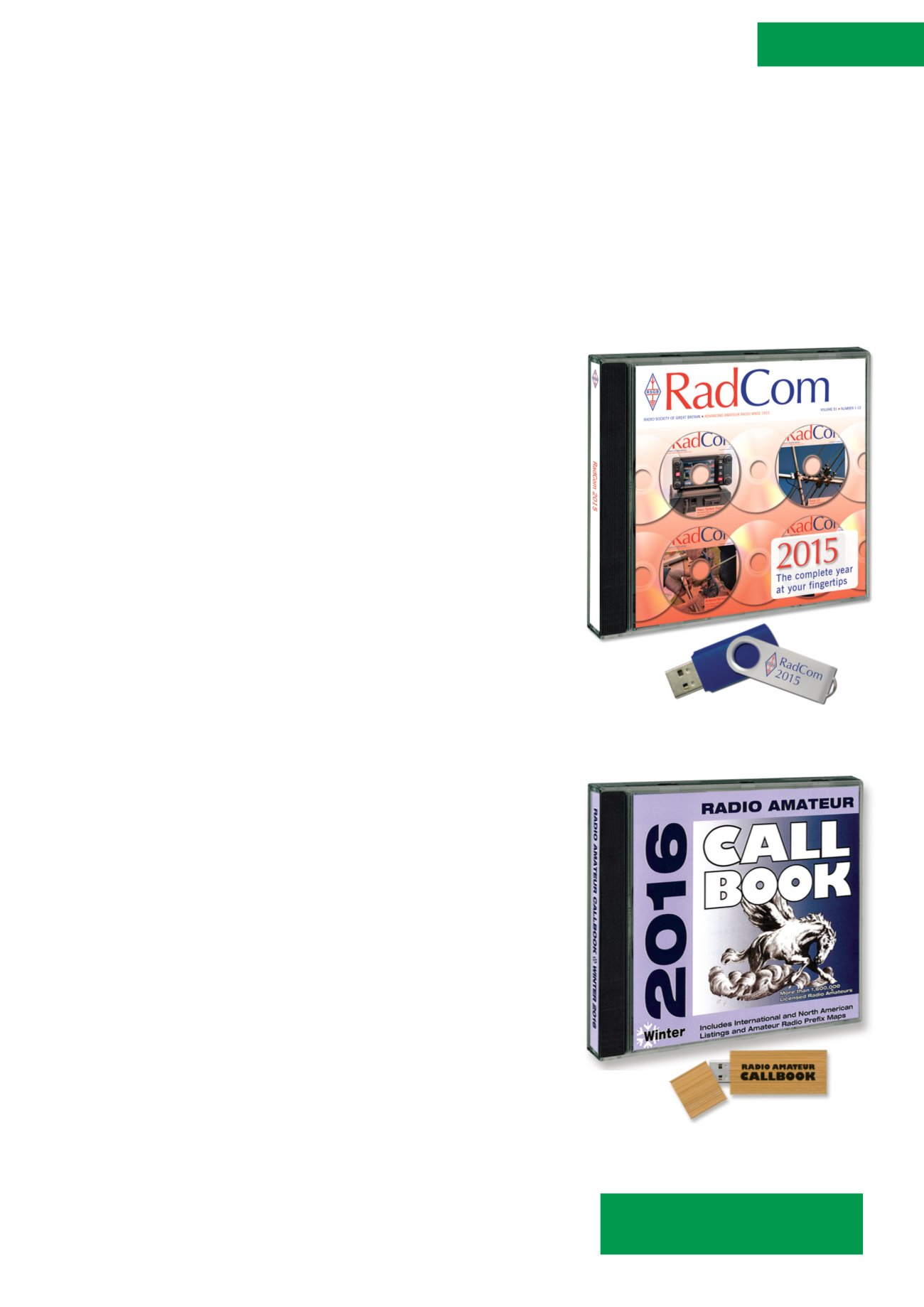
RadCom
2015 CD
At the end of every year, all the master files for that twelve month’s
RadCom
are brought
together and made into PDF files, one for each edition of the magazine. These files contain
every word, every photo, every diagram, every advert and even every speling mistake in a
compact, easy-to-browse format.
2015 was another bumper year, with around 60 construction and technical features, 25
equipment reviews and over 50 other features. Plus there was all the amateur radio news
and new products, club information, letters and much more.
The great thing about the CD version is that it takes up just a fraction of the space of
the original printed versions and has the unique benefit of being searchable – so you’re
only ever a few keystrokes away from, for instance, finding out how many times the word
‘aardvark’ appeared. (The answer is once: last February – despite our best efforts to sneak
it in a second time). On a more serious note, the search facility is invaluable for finding
articles that you half-remember: it’s easy to search on something like ‘Moxon’ and find all
relevant material.
Also on the CD you’ll find a taster selection of chapters from a variety of RSGB books that,
whilst useful in themselves, also give you a flavour of the publication and help you decide
whether it’s a book that you’d benefit from.
Available on CD or USB memory stick
Non Members’ price £14.99
Members’ price £12.74
Pegasus World Call Book 2016
This is the
definitive
international call book.
Supplied as both CD
and
USB memory stick, the Pegasus World Call Book 2016 contains
details of over 1.6 million callsigns. Aside from the obvious, basic information like the
operator’s name, address and (usually) locator information, you’ll often also find additional
data such as previous callsigns, DXCC area, their QSL Manager and more. (QSL Manager
information is of course particularly relevant for very busy stations, DXpeditions and so on).
Perhaps best of all, it requires no installation – you can literally put the CD in the drive or
plug in the memory stick and start using it
immediately
.
The Callbook is fundamentally divided into two: USA and Everywhere Else. There is
much more information in the US database and better search facilities (eg search by name,
city, ZIP code, free text) whereas the rest of the world can only be searched on callsign.
American stations can also be called up on a map, which shows an animated bulls-eye on
the location.
Many other facilities exist, from attaching notes to individual records (“Worked Bill on
100mW Top Band 5/9”) through to outputting callsigns automatically in Morse.
Powerful list and reporting facilities range from basic functions like printing address
labels for QSL cards to creating reports of stations looked up. There is data on HF beacons,
a list of Q codes, information on reciprocal licensing, multilingual support and much more. But of course
its strength is that it is simply so comprehensive – and, as it’s now supplied with a free USB memory
stick copy to accompany the CD, is even better value.
CD
and
USB memory stick
Non Members’ price £44.99
Members’ price £38.24
Giles Read, G1MFG
giles.read@rsgb.org.uk