



 66 / 100

February 2016
66
N
ew challanges and new
modes on the LF bands.
What will you try in 2016?
Andre, FR5ZX (Reunion Island in the Indian
Ocean) has set up an MF receiving station
that appears to be very effective. Using WSPR
he has received DK7FC, PA0A, DF6NM,
IZ7SLZ, SV8CS, EA5DOM and many others
over this approximately 9000km path. Such
great success over a long north-south path
has raised the question of where else could
be regularly reached on 472kHz?
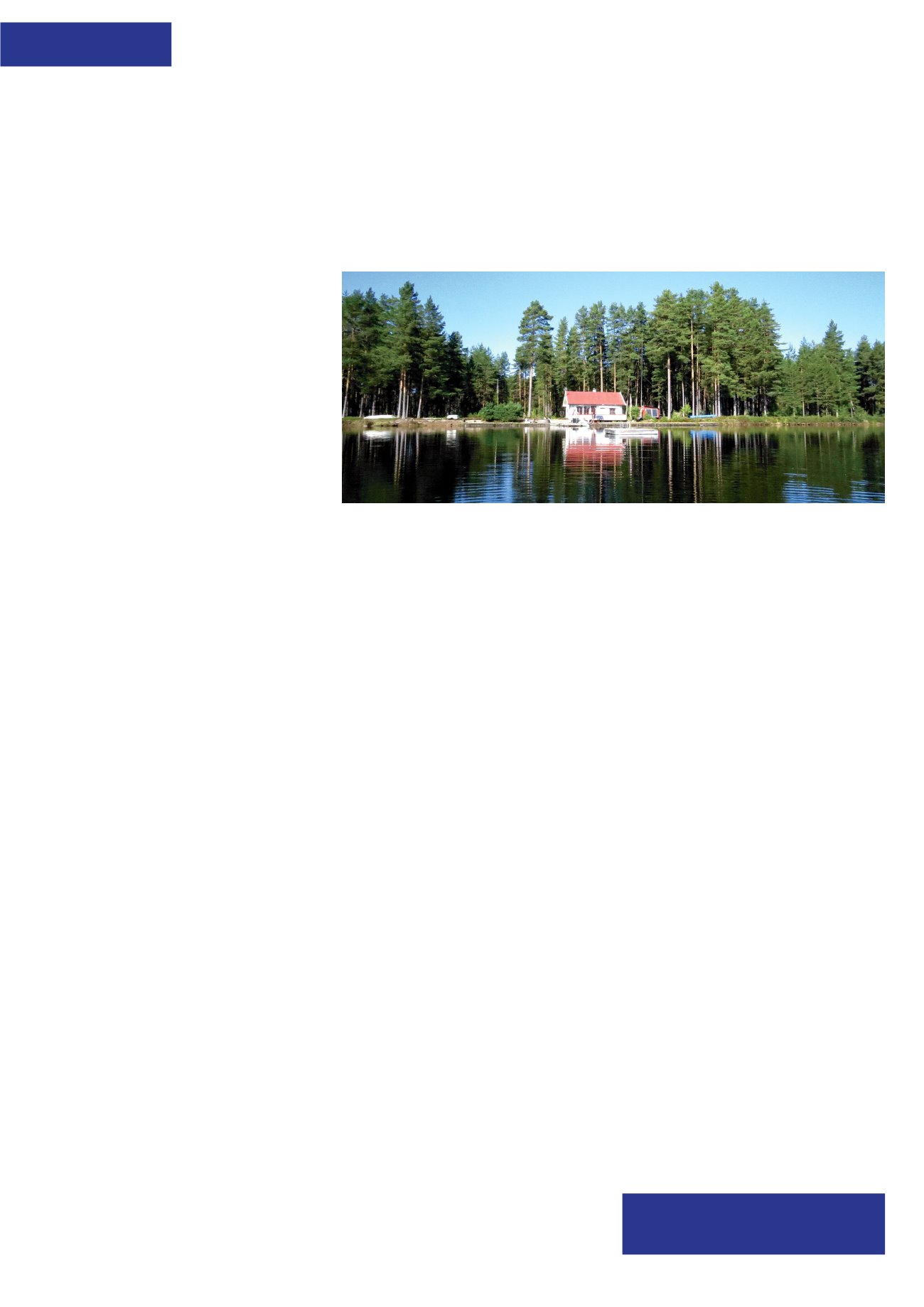
A beautiful beacon
LA6LU has a beacon running 24 hours a
day on 476.5kHz CW, sending LA6LU/BCN
and on 475.625 WSPR. The site is at his
summer retreat in the forests of southern
Norway on the shore of a lake. There is also
a 10m beacon, LA2BCN. Both beacons are
powered from a 460Ah battery charged by a
big 500W solar panel. The hours of daylight
are short in winter and the sun is weak but
the large panel ensures that there’s plenty
of power for the beacons to run through the
dark nights. The transmitter only runs 2.5W
and the vertical aerial is 16.5m tall with four
top-loading wires. The earth system consists
of 16 radials and 5 ground rods.
EbNaut
?
In late October, Paul Nicholson set up a
coherent BPSK receiving system using the
EbNaut
system that is designed to get as
close to the weak signal ‘Shannon limit’ of
channel capacity as it is practical to get. LF is
ideal for experimentation with phase coherent
signals as the carrier phase remains fairly
stable even over long paths. The 136kHz
band has been used for these recent tests
and Joe, VO1NA has been sending some test
transmissions decoded by Paul Nicholson
and Markus, DF6NM.
To prove that all was working as well as it
seemed, Joe encoded the name of his cat into
an
EbNaut
message and Markus revealed
the trans-Atlantic cat’s name is Tangles! They
later pushed the tests to within a dB or so
of the Shannon limit when Joe was running
only 30W from his transmitter. Performance
like this should make 8kHz VLF a more
viable option than it has been up to now.
This mode is obviously highly efficient in
terms of transmitter power required to cover
a long distance, but it’s probably true to say
that more power is required at the receive end
in order to operate the fast PC needed to do
the maths!
If you’re inspired to get involved with these
ground-breaking experiments Paul has written
some software to send or decode
EbNaut
,
see
www.abelian.organd Andy, G4JNT has
an in-depth write up in this month’s Data.
Loran to close? Or not…
A few years ago the outdated 100kHz
Loran-C system was modified to transmit
Enhanced Loran, known as ‘eLoran’. It is
claimed that eLoran produced accurate time
and position information to users over most
of Europe. Thus, the trial is deemed to have
been successful. eLoran was broadcast from
a number of coastal transmitters including
Lessay in northern France and Anthorn in
Cumbria. 136kHz operators within 100km
of these stations experienced quite severe
interference from the extensive sidebands of
these pulses.
Early in December, the Northern
Lighthouse Board announced that the
European eLoran transmitters would cease
operation on 31 December 2015, rendering
the UK transmitter at Anthorn redundant.
The inference being that it too would cease
operation. Those stations in the south and
north-west of England whose 136kHz
operation was compromised by the rattling
sound of Loran will have had a nice New Year
gift in the cessation of this interference! The
consortium behind the trials is attempting to
raise funding for new purpose-built eLoran
stations. Let’s hope any new transmitters
won’t be quite as wide.
Storms and DX
LF aerials are usually quite large and many
stations, including G3XDV, suffered damage
after storms Barney and Clodagh blew
through. The winds didn’t seem to abate for
several weeks making repair work difficult
and the heavy rain caused more problems
with wet insulators becoming lossy. R7NT’s
signal regularly made the 4200km journey
to UA0SNV on 136kHz WSPR and was also
received by G3XKR and G4WGT on the same
band using
Opera
. Trans-Atlantic reports
were frequent on both 136 and 472kHz
including a rare one of F5WK by WA3TTS.
G3LDO
Peter Dodd, G3LDO died in November and
will be sadly missed by the LF community.
He was a keen experimenter from the earliest
days of 73kHz, making some of the first
contacts.
When 136kHz became available, Peter
quickly adapted his station and put out a big
signal on the new band whilst continuing
to break records on 73kHz. Peter’s signals
crossed the Atlantic on both bands on several
occasions, no mean feat in those early days
before the new digital modes were developed.
I met Peter on several occasions,
including the Puckeridge 136kHz activity
and he was always willing to help and was
great company. It’s sad to think that I won’t
be seeing him again.
LF
Regulars
Dave Pick G3YXM
daveyxm@gmail.comThe view across the lake towards LA6LU’s summer retreat, the site of LA6LU/BCN and LA2BCN.